Left Or Right Perfect Dress Up
Metagame.LtdPuzzle
4.026.00 Reviews
- Version
- 1.2.5
- Installs
- 10.00M
- Age Rating
- Everyone
Screenshots
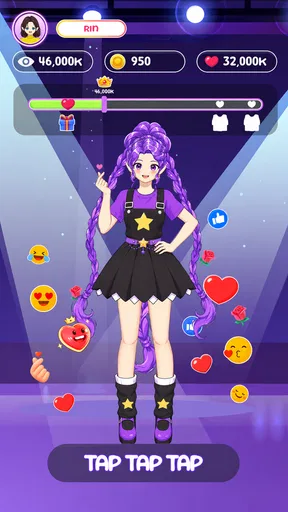

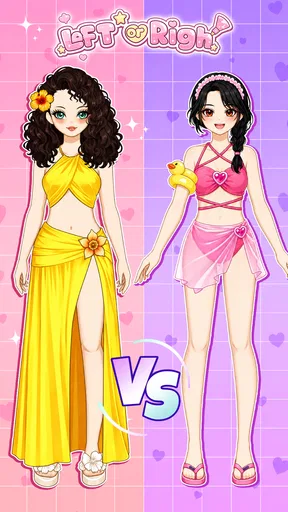
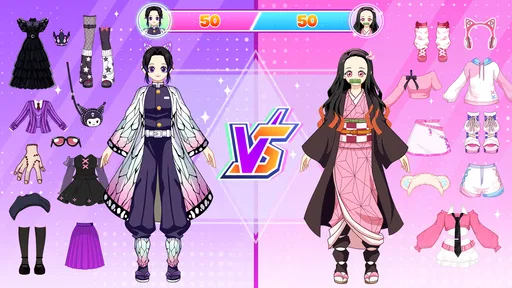
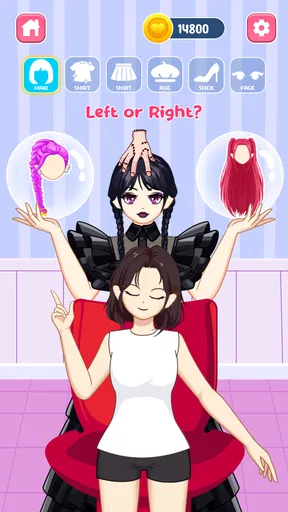
Our Review of Left Or Right Perfect Dress Up
 Analysis by Appyee
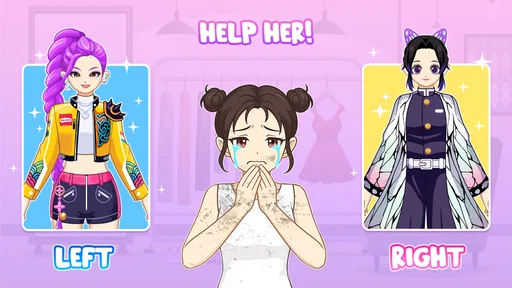
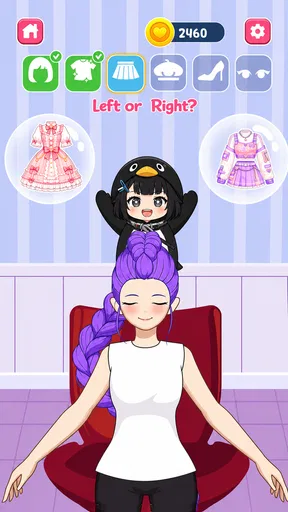
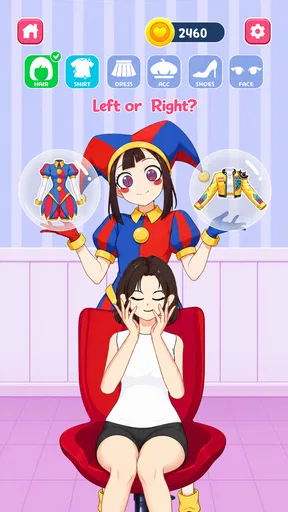
I went into Left Or Right: Perfect Dress Up expecting a simple fashion puzzle, and that is exactly where its appeal lies. The game gives me a style choice, asks me to decide between two options, and then lets me see how that decision affects the outfit. There is no complicated control scheme to learn, so I can start playing almost immediately, whether I have a few spare minutes or want a longer chain of dress-up decisions.
Developed by Metagame.Ltd, this free puzzle game is aimed at Everyone and works on Android devices running version 7.1 or later. Its central idea is easy to understand: mix and match clothing and appearance choices until the character looks right. The name describes the key action, but the experience is less about guessing a single correct answer and more about building a look one decision at a time.
That distinction matters. I do not play it like a traditional logic puzzle with one answer hidden behind a difficult rule. Instead, I treat each choice as a small styling judgement. The fun comes from seeing whether my instinct produces a convincing combination, then deciding whether the next choice can improve it. For players who enjoy visual decisions, quick feedback, and light progression, this is a pleasant format. For anyone looking for deep fashion simulation or a demanding brain teaser, its simplicity may feel limiting.
How the left-or-right loop feels in practice
I find the left-or-right loop works best when I treat each choice as part of one outfit, rather than judging every item on its own. That gives the quick decisions a little more intention and makes the finished look easier to assess. It also raises a useful question for returning players: how much does the current version change the experience they already know?
The first action is deliberately simple
The opening decision is the most important part of the design because it explains the whole game without a tutorial-heavy introduction. I look at the available alternatives, choose the one that fits the direction I want, and continue. The interaction feels closer to making a quick wardrobe decision than managing a full character creator. That makes the game approachable for younger players and for anyone who does not normally play puzzle titles.
I found it useful to make a quick visual plan before tapping. Rather than choosing every item independently, I first decide whether I want a soft, casual, bold, or more coordinated impression. Then I use each left-or-right decision to support that direction. This small habit makes the game feel more intentional. It also exposes one of its interesting trade-offs: a choice that looks attractive by itself may not work as well beside the items already selected.
The controls are particularly suitable for short sessions. There is no need to remember a complicated combination, position objects precisely, or repeat a long sequence after making a mistake. A single choice keeps the action moving. That accessibility is one reason the game has reached over ten million installs, while its average rating sits at 4.0 from around five thousand ratings. Those figures suggest a broad audience, but they also fit my impression that this is designed as an easy-to-enter casual experience rather than a specialist styling tool.
Feedback gives every choice a purpose
The game’s rhythm depends on what happens after I choose. I receive visual feedback on the developing outfit, and that response gives the next decision some context. Even when the change is small, I can compare the result with what came before and decide whether the look is becoming more coherent. This is where the puzzle element works: I am not only picking clothes, I am reading the result of the previous choice.
The feedback is most satisfying when I stop treating it as a simple win-or-lose signal. I look for balance, contrast, and whether the new item supports the overall appearance. A dramatic option can be useful when the outfit feels plain, but it can also overpower everything else. A safer option may look less exciting immediately while producing a cleaner final combination. The game does not require me to know fashion terminology, yet it encourages this kind of visual comparison naturally.
There is also a useful psychological trick in the two-choice format. Because the decision is narrow, I can focus on the difference between the alternatives instead of becoming distracted by a large catalogue. That keeps the pace brisk. At the same time, the limited choice means I cannot always express exactly the style I have in mind. When neither option feels right, the puzzle becomes a compromise rather than a creative design exercise.
For me, the best way to play is to judge the complete silhouette rather than obsess over one accessory. I pay attention to the relationship between the main clothing piece, the colour impression, and the character’s overall presentation. This prevents me from chasing a single attractive item that clashes with the rest. It is a small but meaningful strategy, and it makes repeated rounds less random.
The reward is seeing a look come together
The immediate reward is visual. I get to watch the character’s appearance develop from a basic starting point into a finished outfit. That is enough to make a successful sequence feel worthwhile, especially when the final result matches the direction I had in mind. The satisfaction is not based on complicated equipment, statistics, or a large inventory to manage. It comes from the reveal and from recognising that several small decisions produced one complete result.
I also like that the reward encourages experimentation. After completing a look, I can think about what would happen if I had taken the other path at one of the earlier moments. This turns a finished outfit into a prompt for another attempt. The game is at its strongest when I am curious about the alternative rather than simply trying to clear a task as quickly as possible.
Players should keep their expectations realistic, though. This is not the kind of dress-up game where I can freely drag every garment into place, adjust detailed measurements, or build a character from dozens of precise settings. The reward is compact and immediate. If I want complete control over colour palettes, layers, body proportions, or a persistent wardrobe, a more traditional avatar-creator game would suit me better.
The free entry point makes it easy to test that style of play. Optional in-app purchases are listed at $2.99 per item, so I would approach those purchases carefully and decide whether a particular extra is genuinely adding value to my sessions. The core appeal is the decision loop, not the pressure to collect everything. I would recommend trying the free experience first and only spending if the added content clearly improves the way I personally play.
Resetting makes another round feel natural
Once a look is complete, the session has a natural reset point. I can mentally review what worked, then begin again with a different approach. That reset is important because the game is not asking me to maintain a long strategy across a complicated campaign. Each new round is a clean opportunity to make better choices, try a different mood, or simply see another combination.
This structure fits everyday use very well. Imagine waiting for a friend at a café: I can play one sequence, finish the outfit, and put the phone away without losing the value of the session. On a longer journey, I can continue because each completed look gives me a reason to start another. The same design works for a child who wants a quick visual game and for an adult who wants something relaxing after work without learning a new system.
The reset also reduces the frustration of a poor choice. In a longer puzzle game, an early mistake can force me to repeat a large section. Here, the consequence feels smaller. I can accept an outfit that did not come together and use the next round to change my approach. That low penalty is friendly, although players who enjoy high stakes may find it too gentle.
My practical advice is to use the reset as a comparison tool. On the first attempt, choose what seems most attractive at each step. On the next, prioritise coordination instead of individual appeal. On another, deliberately choose the more unusual alternative. Comparing these approaches helps reveal whether I prefer safe styling or bolder combinations, and it gives the simple loop more depth than a quick tap-through session would provide.
Who will enjoy it, and who should skip it?
I would recommend this dress-up puzzle game to players who enjoy visual choices, short rounds, and immediate results. It is especially suitable for someone who wants a low-pressure activity that can be understood without reading a long explanation. The Everyone age rating also makes its presentation broadly accessible, although younger players may still benefit from an adult’s guidance around optional purchases.
It is a good match for people who like the feeling of styling an outfit but do not want the workload of a full fashion simulator. The left-or-right structure keeps decisions manageable, and the finished look provides a clear reason to continue. It can also work for players who usually avoid puzzle games because they associate them with numbers, wordplay, or difficult logic. Here, the puzzle is visual and intuitive.
I would skip it if my main goal were a deep challenge with carefully layered rules. The game’s ease is a strength for casual play, but it also means that experienced puzzle fans may want more complexity. I would also choose another option if I wanted a social fashion community, extensive customisation, or a long-term character project. This experience is built around quick personal decisions, not around turning styling into a large management system.
Compared with ordinary match-three puzzle games, it replaces board clearing and combo planning with visual judgement. Compared with conventional dress-up apps, it gives me less direct control but a faster, more structured route to a finished look. That middle position is its identity. It is not trying to be a full wardrobe editor, and it is not a conventional logic challenge. It is a sequence of small fashion choices with a visible payoff.
Small frictions that affect the experience
The same simplicity that makes the game welcoming can make it feel repetitive over time. When I want a calm, quick activity, repeating the choice-and-reveal rhythm is satisfying. After several rounds in one sitting, however, I may start wishing for more influence over the final design or more variation in how decisions matter. The game works best in focused bursts rather than as an all-day replacement for a deeper title.
Another limitation is that the two-option format can make a decision feel narrower than the idea of dress-up suggests. I am choosing between presented alternatives, not inventing every part of the outfit myself. That is an important distinction for anyone downloading it because they want unrestricted creativity. I would describe the experience as guided styling: the game sets the boundaries, and I decide which direction to take inside them.
The purchase structure is another point to consider. The game is free to start, while individual in-app purchases cost $2.99 each. I would avoid tapping through purchases casually, especially if a child is playing, and I would treat the free version as the real test of whether the loop is enjoyable. A purchase may be reasonable for someone who already likes the game, but it should not be necessary to understand its basic appeal.
Device compatibility is fairly approachable because the minimum requirement is Android 7.1, but iOS users should still check the relevant store page for their device before downloading. The current Android version is 1.2.5, which is useful context when troubleshooting or checking whether the installed copy is up to date. I would not choose the game based on technical specifications alone; its suitability depends much more on whether I enjoy quick visual decisions.
My verdict on the complete loop
The action is clear: I choose between two styling directions. The feedback is immediate enough to make the next choice meaningful. The reward is seeing a complete outfit that reflects the path I took. The reset is painless, so another session feels inviting rather than demanding. That loop is the whole point, and it holds together because every stage follows naturally from the one before it.
My strongest tip is to play with a styling intention instead of tapping the option that looks best in isolation. Decide on a general mood, watch how each choice changes the full appearance, and use the next round to test the alternative. That approach turns a very simple game into a small exercise in visual consistency and makes the repeated sessions feel more personal.
Metagame.Ltd has kept the concept focused, and I think that focus is both its greatest advantage and its clearest boundary. Left Or Right: Perfect Dress Up is easy to pick up, free to try, and well suited to short breaks. It is not the right choice for detailed customisation or serious puzzle difficulty, but if I want a friendly fashion-themed game where one decision leads quickly to a visible result, I would happily recommend giving it a try.
Verdict
Strengths of Left Or Right Perfect Dress Up
- Large wardrobe with many colors, patterns, and outfit combinations.
- Simple controls make it easy to play with one hand.
- Quick levels are convenient for short gaming sessions.
- Bright visuals and stylish designs appeal to fashion fans.
- Unlockable items provide motivation to keep completing challenges.
Limitations of Left Or Right Perfect Dress Up
- Some outfits and accessories may require in-game purchases.
- Repeated level goals can make the gameplay feel predictable.
- Ads may interrupt play between levels or during reward claims.
- Limited customization may disappoint players seeking detailed styling tools.
- The game may become less challenging for experienced puzzle players.
Other Releases by Metagame.Ltd
View All
Climb & Jump: Obby 3D Tower
Adventure3.5

Prison Escape: 3D Obby Parkour
Adventure3.9
Similar Picks in This Category
View All
Block Blast!
HungryStudio4.8

Braindom: Brain Games Test
Lahana Game Studio4.6

AMAZE!
CrazyLabs LTD4.6

Sudoku - Classic Sudoku Puzzle
Oakever Games4.7

Art Puzzle - Puzzle Games
Easybrain4.8

Amaze GO!
Oakever Games4.9
Frequently Asked Questions
What is Left Or Right Perfect Dress Up?
Left Or Right Perfect Dress Up is a casual fashion and styling game where you create outfits by choosing between different clothing, accessories, hairstyles, and other appearance options. Each decision helps shape the final look, making the game suitable for players who enjoy simple makeover challenges, creative combinations, and quick levels without complicated controls or demanding gameplay.
How do you play Left Or Right Perfect Dress Up?
The main gameplay is based on choosing between two options, usually presented on the left and right sides of the screen. You select the item that best matches the requested style or your personal preference, then continue building the character’s outfit. After completing the look, the game typically shows the result, allowing you to see how well your choices work together.
Is Left Or Right Perfect Dress Up free to download and play?
Left Or Right Perfect Dress Up can generally be downloaded and played without an upfront purchase, although the exact availability may depend on whether you are using Android or iOS. Like many free casual games, it may include advertisements, optional purchases, or extra content that can be unlocked. It is recommended to check the store listing for current pricing and in-app purchase details.
Does Left Or Right Perfect Dress Up require an internet connection?
The basic dress-up experience may work without a constant internet connection, which makes it convenient for short sessions while traveling or when mobile data is unavailable. However, some features, advertisements, updates, rewards, or online content may require connectivity. Offline behavior can also change after updates, so testing the game on your device is the best way to confirm which functions remain available.
Is Left Or Right Perfect Dress Up suitable for children?
Left Or Right Perfect Dress Up is designed as a simple, colorful fashion game and is generally easy for younger players to understand. Nevertheless, parents should review the age rating, advertising settings, and possible in-app purchases before allowing children to play. If the game displays third-party ads or offers optional purchases, parental controls are advisable to prevent accidental taps or unwanted spending.
Play our best games!


